Medicare Part D in Arizona: Eligibility, Who Qualifies, and How to Enroll
Table of Contents
Medicare Part D in Arizona helps cover the cost of prescription drugs that are not included under Medicare Part A and Part B. To be eligible in Arizona, you must be enrolled in Medicare Part A and/or Part B and live in the service area of a Medicare-approved Part D plan available in AZ. Below is a breakdown of who qualifies, the different pathways to eligibility, and what Arizona residents need to know about enrollment timing.
Basic Eligibility Requirements for Arizona Residents
The foundation of Part D eligibility is straightforward: if you have Medicare Part A, Part B, or both, you are eligible to enroll in a standalone Part D prescription drug plan.
Most Arizona residents become eligible at age 65, which is when standard Medicare enrollment opens. You can also qualify earlier through disability or End-Stage Renal Disease (covered below). There is no upper age limit on Part D eligibility — as long as you have Part A or Part B and live in a plan's service area, you can join.
In Arizona, plan availability varies by county and zip code, so where you live in AZ directly affects your options.
How to Check If You Already Have Part D in Arizona
Not sure whether you already have Medicare Part D coverage? Three quick ways to check:
- Look at your plan cards. Standalone Part D and MA-PD plans issue their own card with the plan name and a member ID separate from your red-white-and-blue Medicare card.
- Log in to your Medicare.gov account. The "My plans and coverage" section lists any active drug plan.
- Call 1-800-MEDICARE (1-800-633-4227). A representative can look up your current enrollment for any AZ plan.
If you're on a Medicare Advantage plan that includes drug coverage (an MA-PD), your Part D is bundled into that plan. If you have Original Medicare only and never actively signed up for a drug plan, you probably don't have Part D — and that means the late enrollment penalty is quietly ticking up for every month you go without creditable coverage.
Qualifying Through Medicare Advantage in Arizona
If you enroll in a Medicare Advantage plan (also called Medicare Part C) that includes prescription drug coverage, you are automatically enrolled in Part D through that plan. These are sometimes called MA-PD plans. You do not need a separate standalone Part D plan if your Medicare Advantage plan already includes drug coverage.
Not all Medicare Advantage plans available in Arizona include Part D, but in most cases you cannot pair an MA plan without drug coverage with a standalone Part D plan. The main exceptions are Medicare Medical Savings Account (MSA) plans and certain Private Fee-for-Service (PFFS) plans that don't offer drug coverage. Enrollees in those specific plan types are allowed to add a standalone Part D plan. For everyone else in AZ, plan on getting drug coverage through your MA-PD or by staying on Original Medicare with a standalone Part D plan.
The choice between standalone Part D paired with a Medigap plan versus an all-in-one MA-PD plan often comes down to how your prescriptions are covered. "If you want a Medicare Supplement plan, then you would find a Part D carrier that covers your area and get a Part D plan from the carrier. If you are interested in a Medicare Advantage plan, usually the MA-PDs have similar coverage to a Part D prescription drug plan," says Lynn Hapke, a licensed Medicare agent in New Hampshire. "Ideally, you speak with a broker and review your prescription list and confirm that your prescriptions are in the formulary of the plan you choose." A local Medicare agent can help you sort through the options available in your area of Arizona.
Eligibility Through Disability
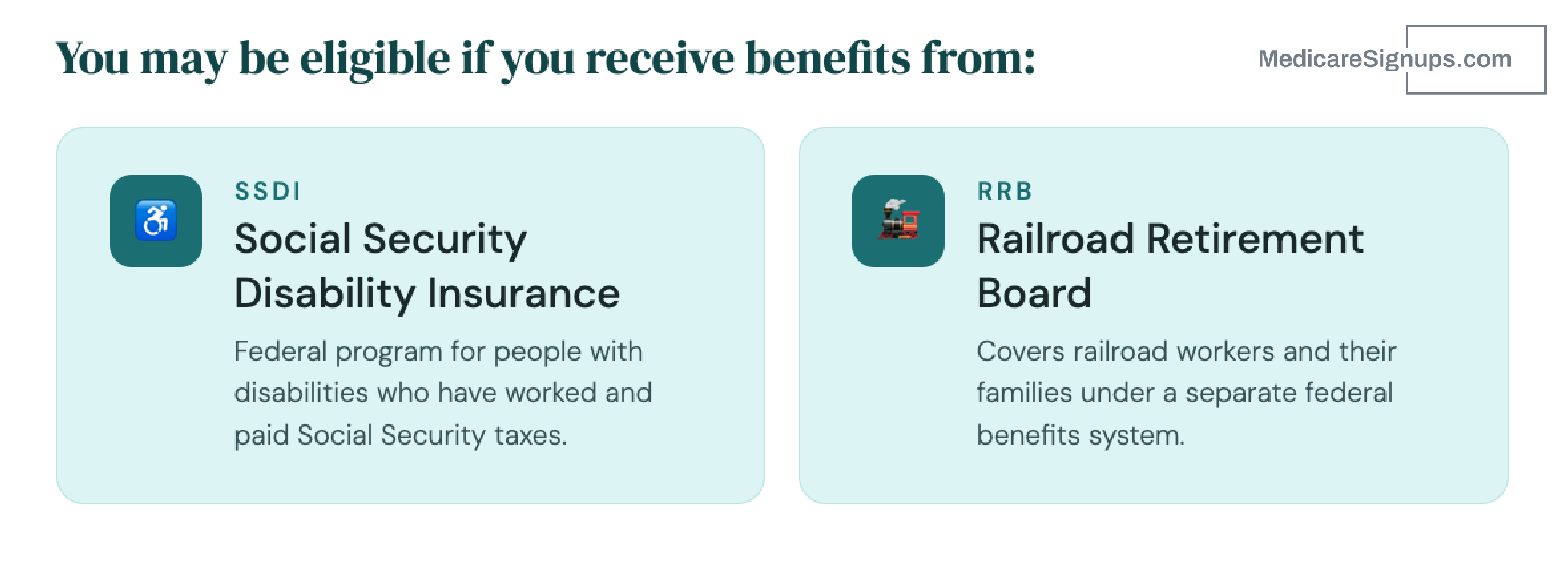
If you're a Arizona resident with a disability and receive Social Security Disability Insurance (SSDI) or Railroad Retirement Board (RRB) disability benefits, you become eligible for Medicare, including Part D, after 24 months of receiving those benefits. Once your Medicare coverage kicks in, you can enroll in a Part D plan during your Initial Enrollment Period.
Eligibility Through End-Stage Renal Disease (ESRD)
Individuals in Arizona with End-Stage Renal Disease (ESRD) qualify for Medicare regardless of age. Once enrolled in Medicare through ESRD, you are eligible for Part D coverage. This is particularly important for medications related to kidney treatment, including immunosuppressive drugs following a transplant.
When Arizona Residents Can Enroll in Part D
Even if you're eligible, you can only enroll during specific windows.
Initial Enrollment Period (IEP)
A seven-month window that starts three months before the month you turn 65 and ends three months after. This is your first chance to sign up for Part D in Arizona.
Annual Enrollment Period (AEP)
Runs from October 15 to December 7 each year. Arizona residents can join, switch, or drop a Part D plan during this window.
Special Enrollment Periods (SEPs)
SEPs are triggered by qualifying life events, such as moving to a new part of AZ, losing other drug coverage, or qualifying for Extra Help.
Moving is one of the most common SEP triggers people overlook, whether you're moving within AZ or relocating from another state. "When you move to a new state, your Medicare coverage does not automatically follow you unless you are on Original Medicare without any supplemental plans," says Brian Adelstein, a licensed Medicare agent in Ohio. "For Medicare Advantage and Part D drug plans, moving out of your current plan's service area triggers a Special Enrollment Period." If you're relocating to or within Arizona, notify your plan and Medicare before the move so your coverage doesn't lapse.
The Late Enrollment Penalty
If you go without creditable prescription drug coverage for 63 or more consecutive days after your IEP ends, you'll face a late enrollment penalty. This is a permanent surcharge added to your monthly Part D premium, calculated at 1% of the national base beneficiary premium for each month you were without coverage.
The Part D late enrollment penalty doesn't go away. It stays with you for as long as you have Part D. For Arizona residents, this is one of the biggest reasons to enroll on time, even if you don't currently take many prescriptions.
Understanding what counts as creditable coverage is critical to avoiding this penalty. "Creditable coverage simply means you have existing coverage that's at least as good as Medicare's standard benefits. It's your proof that you weren't without decent coverage during a period when you could have enrolled," says Brian Maiz, a licensed Medicare agent in California. "The most common situation is still working at 65 with coverage through your employer or your spouse's employer. If that coverage is creditable, you can delay Medicare enrollment without penalty. Once that ends though, you typically have just 63 days to enroll before penalties kick in." Keep your creditable coverage notices from any AZ employer or union plan in case you need to prove your timeline later.
What Part D Covers in Arizona
Part D covers most commonly prescribed medications, but every plan has its own formulary (list of covered drugs). Plans available in AZ may differ in which drugs they cover, what copays they charge, and what tier your medications fall under. When comparing Part D plans, check whether your specific prescriptions are on the formulary.
If you take multiple medications, the comparison process matters even more. "For multiple medications, the key is to review each plan's drug list before you enroll or switch. Look up all of your prescriptions by name and dosage, check their tiers and which pharmacies the plan prefers, and compare the total yearly cost, not just the premium," says Tamela Clayton, a licensed Medicare agent in Texas. "An independent Medicare agent can help you run this comparison across several plans so you're not overpaying."
One mistake agents see repeatedly is people sticking with the same Part D plan year after year without re-checking it. "The most frustrating misconception I have to clear up with clients year after year is that they think they can continue to keep their Prescription Drug Plan without reviewing if their drugs are still covered in the formulary, that their pharmacies are still preferred or in-network, and that their specific drug, dosage, and frequency haven't changed in a way that causes their plan to no longer be the least expensive option for their menu of drugs and pharmacies," says William Murray, a licensed Medicare agent in California. Formularies and AZ pharmacy networks change every year, so reviewing your plan during AEP is the difference between paying what you should and overpaying for the next twelve months.
If you hit a coverage gap during the year (sometimes called the donut hole), you used to pay a larger share of drug costs until you reached catastrophic coverage. The good news: that gap has been restructured. "Starting January 1, 2025, the Medicare Part D donut hole was eliminated, replaced by a maximum out-of-pocket cap on prescription drugs," says Vernon Jones, a licensed Medicare agent in North Carolina. "This means once you spend up to the cap on covered medications, you pay nothing for the rest of the year, significantly reducing costs for high-drug spenders." The cap started at $2,000 in 2025 under the Inflation Reduction Act and is indexed for inflation each year, so Arizona residents should check their plan's current out-of-pocket limit when enrolling.
Next Steps for Arizona Residents
If you're approaching 65 or newly eligible for Medicare in Arizona, don't wait to explore your Part D options. Comparing plans early ensures you find the best coverage for your prescriptions at the lowest cost. A local Medicare agent can help you compare AZ plans, check your prescriptions against formularies, and make sure you enroll on time to avoid penalties.

Mark Slemons
Licensed Arizona Medicare Agent
Contact Mark through Medicare Agents Hub »
Hi! My name is Mark, and I wanted to say "Thank you" for having a look at my profile. I can only imagine how frustrating it has been trying to identify an agent that you can feel comfortable contacting to help you sort through coverage options. Unfortunately, you can't afford to make a mistake. Maybe a little information about me can help.
I've been helping individuals, families, and business owners to sort through the insurance maze since 2019. A maze isn't much of an exaggeration! Every situation is different and one size does NOT fit all. You are not like your neighbor, your best friend, or even your parents. What worked for others may or my not work for you!
I firmly believe that if I can HELP you understand your options, you will be able to make an educated choice that will be appropriate for you. I'm not trying to SELL you anything! Buying coverage is strategic. It has to protect you against the things that matter the most while staying within your budget. There are lots of carriers and plan offerings that are all vying for your dollars. We need to maximize the coverage for the money you spend.
I am an independent insurance agent and your dedicated consultant. Since I'm exclusively contracted to one of the nations largest brokerages - HealthMarkets - I have access to systems, tools, and training that makes me knowledgeable and efficient while having access to all of the major carriers.
But I don't work for the carriers, and I don't work for HealthMarkets. I work ONLY for you! That matters and it means that I am committed to assisting you in finding the most suitable plans that align with your unique needs and budgetary constraints. I sift through the options from nationally and locally recognized companies, so you don't have to.
What's more, my services are free AND you will know how to reach me when needed! So don't wait, contact me today to explore your Medicare insurance options - be sure to mention that you discovered me on Medicare Agents Hub!